
Find Coeur d'Alene Residents
Begin with the type of fact already known. A street address points first to the Kootenai County Assessor, which connects the physical property address to a parcel number and recorded owner. An owner's name can then be checked in the Recorder's Real Estate Index. A name without an address may call for VoteIdaho, Idaho iCourt, a business filing, or a professional license. For a past household, use city directories, newspapers, yearbooks, cemetery records, and census material. The Coeur d'Alene residents directory works best as a route through those separate sources.
Ownership is not occupancy. A tax mailing address can differ from the property address, and a deed can name a trustee or lender. Record the date and exact field shown, then confirm identity in a second source.
- Search the county parcel roll by owner, address, PIN, AIN, or legal description.
- Use VoteIdaho for an individual registration check within Idaho's access limits.
- Run the Recorder index by party, instrument number, or legal description.
- Check library and archive collections for older names and address forms.
- Send a focused request to the true custodian when no index is online.
Coeur d'Alene Resident Record Keepers
Kootenai County is the main records jurisdiction. The Assessor keeps parcel facts, the Recorder holds recorded real-property documents from 1881 forward, and the Clerk serves as chief elections officer along with other county roles. Court copies have a separate District Court route. These offices share an address but not one request queue.
Kootenai County Assessor
451 Government Way
Coeur d'Alene, ID 83814
208-446-1500
Search Coeur d'Alene Parcels
The Kootenai Parcel Information Search is the quickest official bridge between a home and a recorded owner. Search tips say to put the last name first, use less information for more matches, spell out the street name, and use an asterisk as a wildcard. Results may include the parcel number, legal description, lot size, last-transfer instrument, building traits, photos, and sketches. The portal bars use as a mailing or phone list for solicitation or market research.
| Field | Use | Tip |
|---|---|---|
| PIN | Exact parcel | County identifier |
| AIN | Assessment account | Copy it exactly |
| Owner | Known owner | Last name first |
| Property Address | Known home | Spell out street |
| Legal Description | Lot or tract | Useful after renumbering |
The live assessor screen shown here displays those paths.
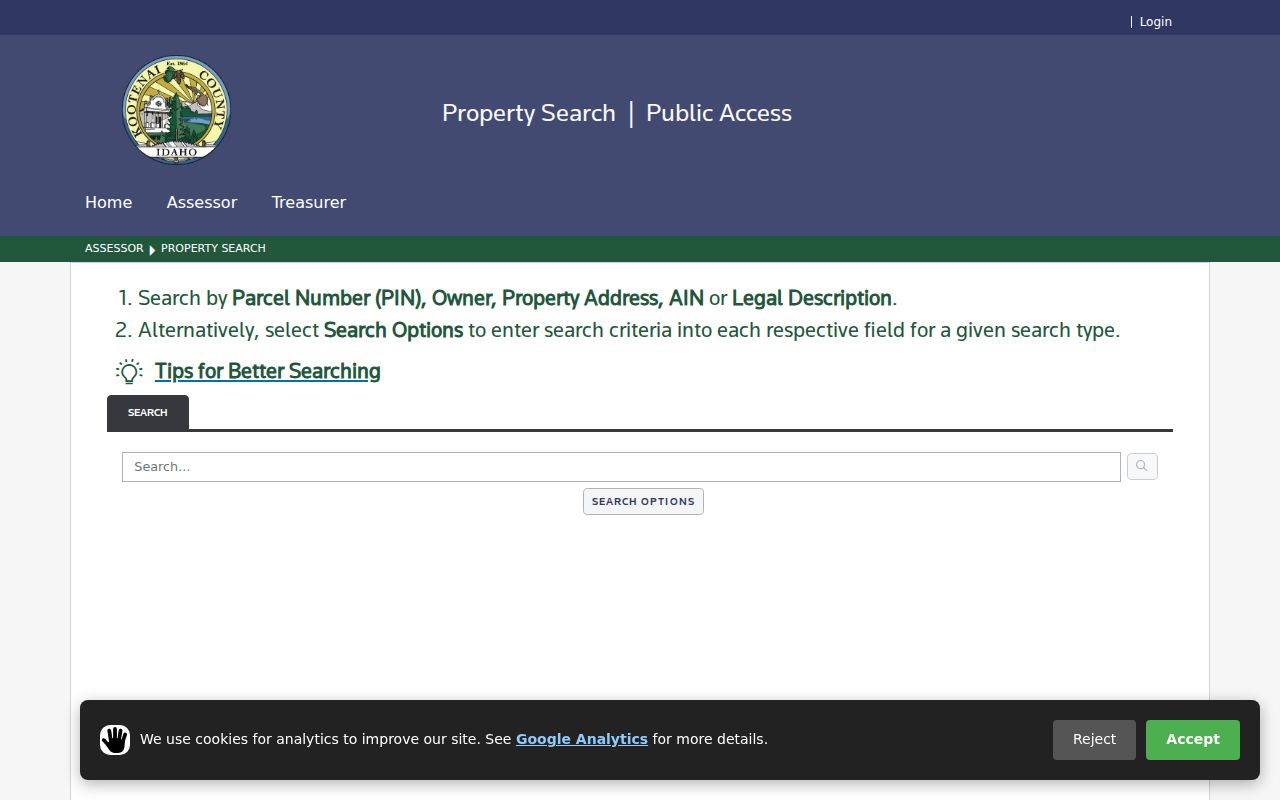
The image helps separate an owner's tax record from proof of every occupant.
Coeur d'Alene Deed Name Trails
The Recorder adds legal transactions. Kootenai County records begin in 1881, while online research is advertised from 1996 to the present. A grantor gives an interest; a grantee receives it. Search both roles because one person can appear on either side of a deed, easement, lien, or release. Older work may require an office visit, mailed copy request, deed books, or paid research.
Open the Real Estate Index to see the entry point.
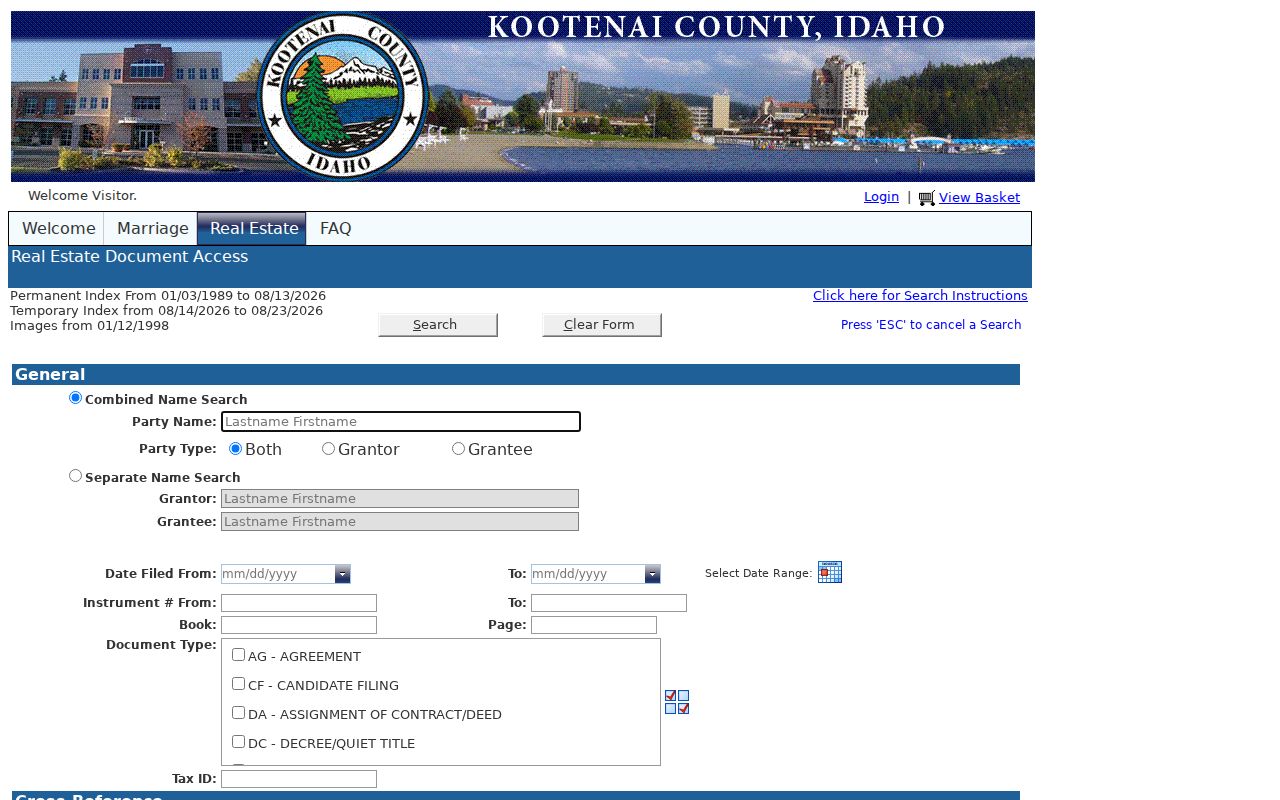
An index is a finding aid. Verify the filed image when its text matters.
- Index
- A list pointing to a filed record.
- Parcel
- A mapped unit of land.
- Legal description
- The land description used in deeds.
- Criss-cross directory
- A directory arranged by address.
Idaho Voter Records and Privacy
VoteIdaho supports an individual voter check, while full lists follow a separate Kootenai Elections request. Idaho withholds the month and day of birth, driver's-license number, and last four Social Security digits. Ballot choices stay secret. Political-purpose and solicitation limits also apply.
Use records lawfully. Never use public data to stalk, harass, threaten, or harm a person, and respect protected addresses.
Safe at Home gives eligible survivors a substitute address. A hidden address is a safeguard, not proof someone left Coeur d'Alene.
Current Coeur d'Alene Resident Rolls
No current source covers all residents. Each official index records a role, such as owner, voter, court party, business agent, or license holder. Date and role matter as much as a matching name.
| Source | Who It Lists | Keeper | Access |
|---|---|---|---|
| Parcel roll | Recorded owners | Kootenai Assessor | Free portal |
| Voter record | Registered voters | Idaho SOS and Elections | Limited lookup or request |
| Real Estate Index | Document parties | Kootenai Recorder | Free index |
| City directory | Departments and officials | City | Free online |
| Business search | Entities and filing roles | Idaho SOS | Free online |
Use each roll for the role it documents. None proves a whole household.
Coeur d'Alene Court Party Search
Idaho iCourt covers state trial courts in Kootenai County's First Judicial District. Public users can use Smart Search by party name or case number. Filters include county, case type, status, filing date, and judicial officer. Results may show the caption, party role, status, filed date, hearings, and register of actions. A docket is the event list, not the full file.
Sealed, juvenile, exempt, and some older material will not appear. District Court Records handles copies. Similar names need comparison with dates, roles, and another public source.
Compare Coeur d'Alene Directory Sources
Official rolls and commercial search services serve different roles. A county or state index identifies its custodian, fields, and legal limits. A commercial result may gather many leads quickly, but it can merge names or repeat stale data. For any claim about a Coeur d'Alene resident, return to the original public record and preserve its date.
| Source type | Strength | Limit |
|---|---|---|
| Official parcel or deed index | Named custodian and document trail | Owner or party is not always an occupant |
| Official voter or court search | Defined public fields and roles | Protected, sealed, or exempt data stays hidden |
| Commercial search category | Fast lead gathering | Possible stale or merged identities |
Free access does not mean unrestricted use. Read each notice before copying, sharing, or relying on personal information.
Coeur d'Alene Public Record Requests
The Idaho Public Records Act, Idaho Code sections 74-101 through 74-127, governs many state and local records. Name the record, date range, office, address, case, or permit. Section 74-103 sets response and extension rules; section 74-120 limits distribution of some personal-information lists for solicitation. General requests do not replace court, marriage, or certified vital-record routes.
The City JustFOIA portal accepts a described city request.
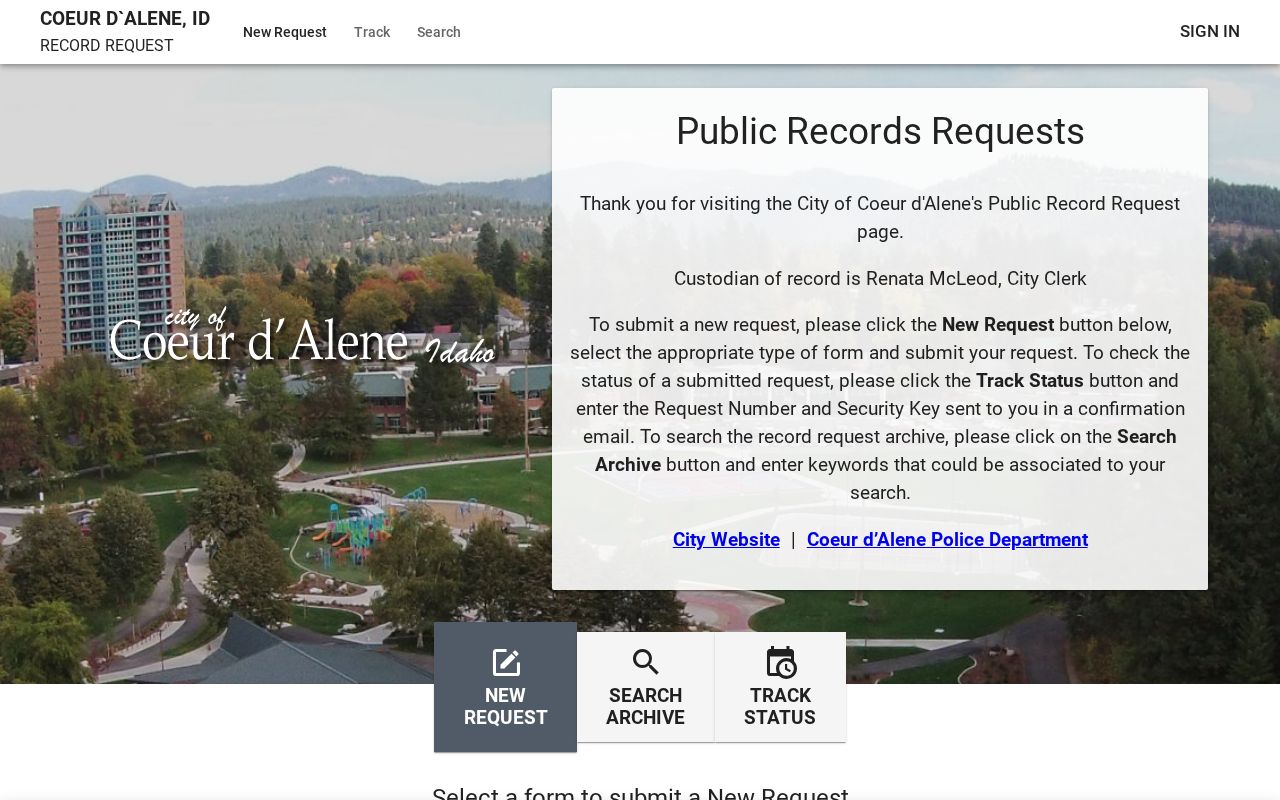
The screen is a request gateway, not a bulk resident list.
Coeur d'Alene Genealogy Sources
The public library genealogy collection links HeritageHub, cemetery information, Idaho archives, and land tools. Its Nelson Room holds more than 2,000 local and regional items. The Museum of North Idaho adds city directories, phone books, probate, marriage and cemetery indexes, photographs, oral histories, and research help. An address, spouse, trade, school, burial, or dated event can separate two people with the same name.
The library genealogy page displays its research paths.
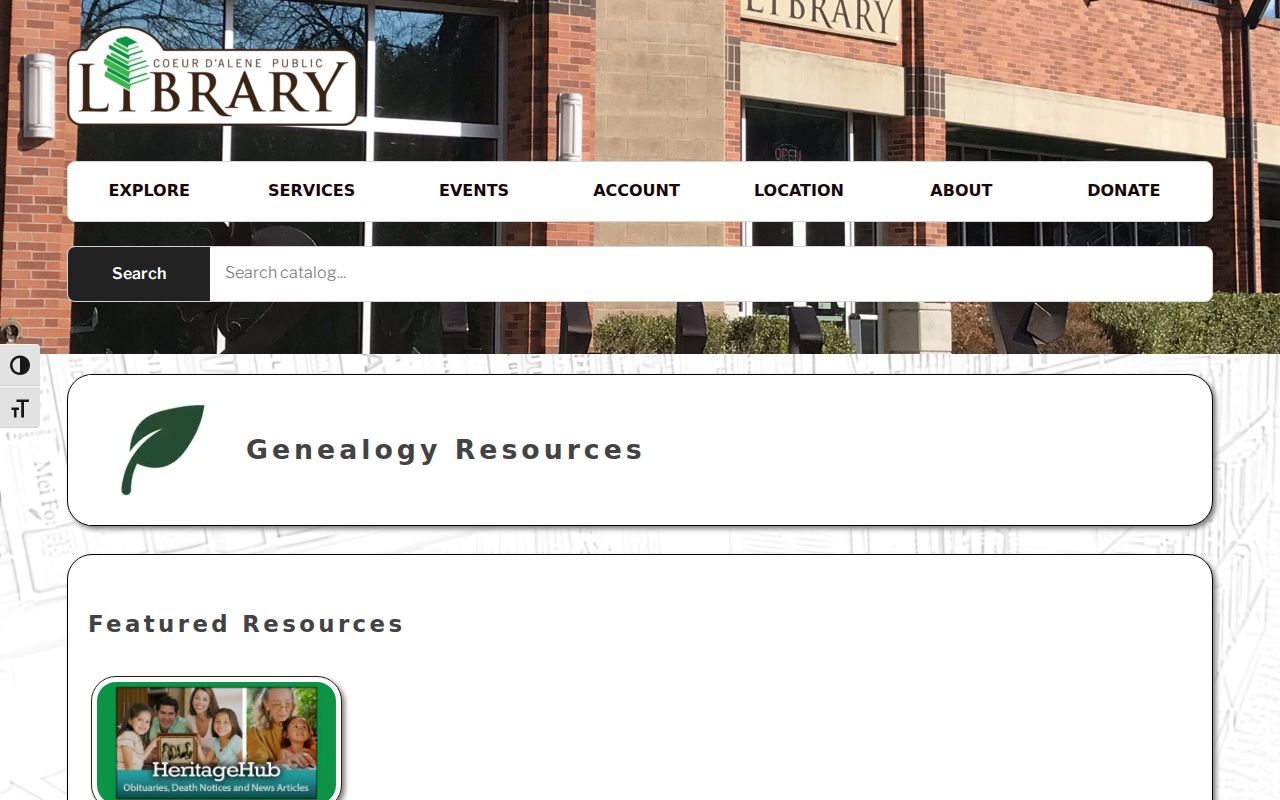
Local collections fill gaps left by current property and voter rolls.
Search Coeur d'Alene Archives
The Coeur d'Alene Digital Archives provides newspapers and Coeur d'Alene and Lake City yearbooks. Newspapers can link a resident to a school, business, club, obituary, court event, or street. Yearbooks show names, classes, activities, and photos, but not a later home address. Search spelling variants and narrow dates, then cite the title, issue, page, and role.
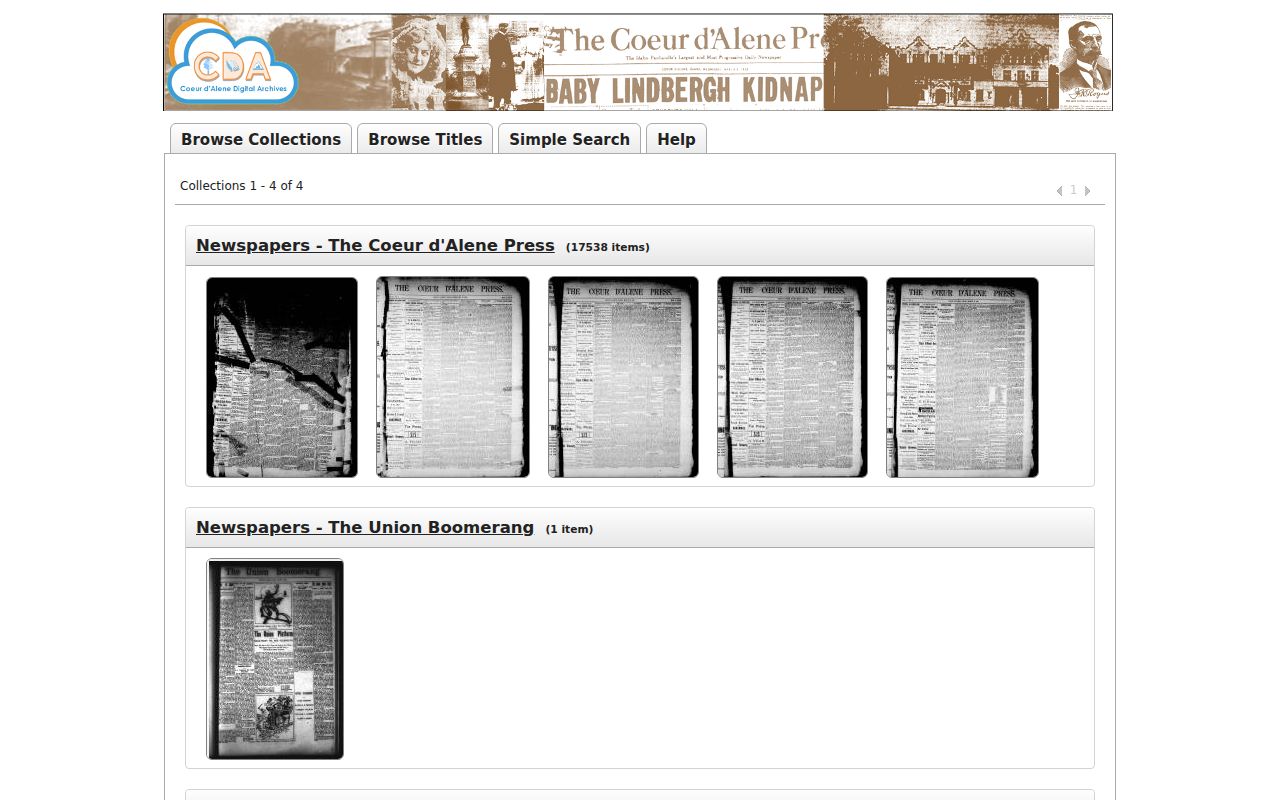
The capture shows the open collection routes used to build a dated trail.
Confirm Coeur d'Alene Resident Evidence
A reliable resident trail keeps place, time, and role separate. Start a research log with the exact name as printed, the record date, the source title, the agency or collection, the city or ZIP, and the role shown. An assessor result identifies an owner of record. A deed index identifies a party to an instrument. A permit may identify an owner, applicant, or contractor. A court result identifies a party in a case. None of those labels automatically means that the person slept at the listed address on the record date.
Addresses need the same care. The situs address is the physical label attached to a parcel, while the tax mailing address is where the county sends notices. The legal description identifies land through a subdivision, lot, block, tract, or survey description. A postal city and ZIP describe mail delivery, not the incorporated boundary. Coeur d'Alene postal labels can extend beyond city jurisdiction, and a post-office box is not a residence. Save the PIN or AIN after finding a parcel because that identifier remains useful when an address is abbreviated, reformatted, or changed.
Use KCEarth and the City GIS map to inspect parcel geometry, roads, city limits, zoning, and nearby lots. A map can show that an address point sits on a parcel or that two parcels touch. It cannot establish who occupies a building. Layer dates matter because annexation, parcel splits, and map updates change the picture. The research did not locate a complete official street-renumbering crosswalk or a confirmed one-click neighbor export, so older addresses require a three-part check: a parcel or legal anchor, a street or map anchor, and a person tied to the same period.
Records requests work best after the online indexes are exhausted. Ask for a named permit, deed, incident, meeting packet, or file with a date range and address. Send the request to the department that created or keeps it. District Court Records handles court copies; the Recorder handles recorded documents and marriage-license transactions; Idaho Vital Records issues statewide certificates under separate eligibility rules. A broad request for everyone on a street is less useful and may collide with statutory privacy or personal-list limits.
Current custody and registry sources have narrow purposes. The Kootenai County Sheriff publishes an in-custody report, wanted reports, a daily press log, and VINE links. Idaho maintains separate correctional and sex-offender searches. Those systems describe custody, supervision, or a statutory registry status, not a general Coeur d'Alene residents directory. Record the status and search date, avoid turning the result into a broader claim, and follow every public-safety notice on the source.
The final conclusion should match the proof. Mark a match confirmed only when stable details agree across sources. Use probable when the name, place, and time align but one key identifier is missing. Use possible when only a name or address resembles the target. Leave an issue unresolved when privacy, a time gap, a dynamic portal, or conflicting records prevent a sound match. That measured approach protects both accuracy and the people named in public files.
Historical Coeur d'Alene Resident Directories
Printed city directories and phone books give dated snapshots of Coeur d'Alene names, addresses, occupations, spouses, and firms. The Idaho State Historical Society lists regional runs on reels 18 through 21, while a separate shelf list has differences that should be confirmed with staff. The Museum of North Idaho and library collections add local help.
An entry proves only what that edition printed. Compare nearby years, deeds, census schedules, newspapers, cemeteries, and vital indexes. A gap can mean a move, omission, boundary change, or a household member listed under another name. Keep every date tied to its source.
Historical vital records follow another clock. Idaho Code section 39-270 opens births after 100 years and deaths, marriages, divorces, and stillbirths after 50 years. Newer certified copies require the authorized interest described by the state. Divorce decrees come from the court, while the state vital-records office issues certificates. FamilySearch collections with Kootenai County records may supply an older clue, but match each result to its county, date, relatives, or address.
Cemetery and obituary sources add ties that property records rarely state. The library links cemetery resources and HeritageHub, while the City cemetery division, Museum indexes, and newspapers can reveal burial dates, relatives, former towns, and service details. Those facts often connect a directory name to the right deed or census household. A careful residents directory search is built from several dated records, not one current-looking match.